Tuesday, November 29, 2011

Book Of Etiquette And Ceremonial

 
The Yili (仪礼; literally "Etiquette and Rites") or Book of Etiquette and Ceremonial is a Chinese classic text about Zhou Dynasty rituals. The Yili, Zhouli 周礼 "Zhou Rites", and Liji 礼记 "Record of Rites" — collectively known as the "three ritual texts" — are Confucianist compilations of records about rites, ceremonies, protocols, and social customs.
Title
The title Yili combines the Chinese words yi 仪 "demeanor; appearance; etiquette; ceremony; rite; present; gift; apparatus" and li 礼 "ceremony; rite; ritual; courtesy; etiquette; manners; propriety; social customs". In modern Standard Mandarin, the compound yili 仪礼 means "etiquette; rite; protocol".
This ritual text was first called Yili in the (ca. 80 CE) Lunheng. During the Han Dynasty (206 BCE–220 CE), it was also called Shili 士礼 "Rites for Common Officers", Lijing 礼经 "Classic of Rites", Ligujing 礼古经 "Old Classic of Rites", or simply Li 礼 "Rites". Among Zhou Dynasty feudal ranks, this shi 士 was a "low-level noble; yeoman; common officer; scholar".
History
Many early Chinese texts were lost during the Qin Dynasty (213-206 BCE) burning of books and burying of scholars. When texts were restored during the early Han Dynasty, the Yili was extant in two versions: "Old Text" (supposedly discovered in the walls of Confucius's residence) and "New Text" (supposedly transmitted orally). Zheng Xuan (127–200) compiled an Yili edition from both the Old and New Text versions and wrote the first commentary. Wang Su (195-256 CE) wrote two books about the Yili and criticized Zheng, but Zheng's version became the basis for later studies and editions.
The Yili text was carved into the 837 CE Kaicheng Stone Classics, and first printed from woodblocks from 932-953 CE. In 1959, archeologists excavated some 1st-century Han tombs at Wuwei, Gansu and discovered a cache of wooden and bamboo textual copies. They include three fragmentary manuscripts of the Yili, covering more than seven chapters.
The first Western translations of the Yili were in French (Charles-Joseph de Harlez de Deulin 1890 and Seraphin Couvreur 1916). John Steele (1917) translated the full text into English.
Content

Friday, November 25, 2011

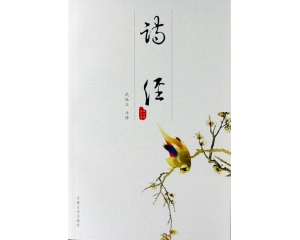
The Classic Of Poetry

The Book of Songs, formerly called Poetry, is the earliest general collection of ancient Chinese poems. It is also called Three Hundred Poems, for it includes 305 poems in total. Since Emperor Wu of the Han Dynasty, Poetry was regarded as a must read by the Confucians, so it is called The Book of Songs. The interpretation and study on The Book of Songs has been carried on generation after generation, and it is not stopped until now.Collected in The Book of Songs were poems popular around the region from the north of the Yellow River basin to the Jianghan Drainage Area during the period from the early Western Zhou Dynasty (the 11th century BC) to the mid Spring and Autumn Period. It is said that they had been compiled by Confucius.In the ancient times, poems are lyrics for accompanying tunes. The Book of Songs is classified into three parts according to contents, namely Feng (ballads), Ya (peoms from intellectuals or aristocrats), and Song (songs for praying). Feng, also called Guofeng, is mostly the collection of folk songs. It is divided into 15 groups and has a total of 160 poems, which mainly express the love between men and women and the dissatisfaction of the people toward the emperor. Ya contains 105 poems, including 31 articles of Daya and 74 articles of Xiaoya, most of which were written by court officials and aristocrats. Song collects 40 poems, which are songs for offering sacrifice and praising emperors by the aristocrats. They are usually accompanied with dance during the performance. Although the Book of Songs is a collection of works of many people, authors of most works are unknown, just a small part of them were researched out by later generations.The Book of Songs exerted a very profound effect on ancient China in terms of politics, culture, language, and even thinking. During the Spring and Autumn Period, diplomats often expressed words that they didn’t want to say by themselves or that were difficult to say by quoting sentences from the Book of Songs, which is similar to today’s diplomatic language. Confucius, a sage of China and who gave a high praise to the Book of Songs, claimed that people’s cultures, observation abilities and interpersonal skills could be highly improved through the study of the Book of Songs.

Wednesday, November 23, 2011

How To Write A Book


If you want to write a book on a particular topic, you can just start writing and keep on going. Once you have written around 75,000 words you have written a book. You can sell your book to a major publisher. You can be a bestseller in a few days and make good money.
This is the procedure for writing a book generally but chances of becoming popular this way are very thin. Before starting a book you must know that what you are going to write. You must have knowledge of audience that what they are going to like and if at all there is an audience for your kind of book. This may sound awkward but you have to convince a publisher while selling your book to them. You can sell books online as well in soft copy if you do not get a publisher.
Mostly, new authors start their book by getting inspired by any other book. They don’t think that they are almost rewriting a book and there may not be audience for the book they are writing.Generally there are two types of books – truth and lies that means nonfiction and fiction. Fiction ones are also called Novels. There are around hundred thousand books published each year only in English language. So you must know what type of book you are about to write. There are online books stores also where you can buy books online.
Let’s say you have read a Harry Potter novel and you are highly impressed with it. You also start writing a book and words come out of you pouring. You become enthusiastic and you write and write until your computer hard disk is full.This is great but while you are writing the book you should ask yourself that where and on which shelf your book will be kept in a book store or online book store. If you are not sure you should visit a book store yourself. You will see your book right next to Harry Potter books so it’s not that you have to write a book, you have to think a lot before writing a book.


Wednesday, November 16, 2011

The Chinese "Book of songs"

GUAN SUI
Guan-guan go the ospreys ,
On the islet in the river .
The modest , retiring , virtuous , young lady : --
For our prince a good mate she .
Here long , there short , is the duckweed ,
To the left , to the right , borne about by the current .
The modest , retiring , virtuous , young lady : --
Waking and sleeping , he sought her .
He sought her and found her not ,
And waking and sleeping he thought about her .
Long he thought ; oh ! long and anxiously ;
On his side , on his back , he turned , and back again .
Here long , there short , is the duckweed ;
On the left , on the right , we gather it .
The modest , retiring , virtuous , young lady : --
With lutes , small and large , let us give her friendly welcome .
Here long , there short , is the duckweed ;
On the left , on the right , we cook and present it .
The modest , retiring , virtuous , young lady : --
With bells and drums let us show our delight in her .
LU MING
With pleased sounds the deer call to one another ,
Eating the celery of the fields .
I have here admirable guests ;
The lutes are struck , and the organ is blown [for them] ; --
The organ is blown till its tongues are all moving .
The baskets of offerings [also] are presented to them .
The men love me ,
And will show me the perfect path .
With pleased sounds the deer call to one another ,
Eating the southernwood of the fields .
I have here admirable guests ;
Whose virtuous fame is grandly brilliant .
They show the people not to be mean ;
The officers have in them a pattern and model .
I have good wine ,
Which my admirable guests drink , enjoying themselves .
With pleased sounds the deer call to one another ,
Eating the salsola of the fields .
I have here admirable guests ;
For whom are struck the lutes , large and small .
The lutes , large and small , are struck ,
And our harmonious joy is long-continued .
I have good wine ,
To feast and make glad the hearts of my admirable guests .

Sunday, November 13, 2011

Unbroken: A World War II Story of Survival, Resilience, and Redemption

On a May afternoon in 1943, an Army Air Forces bomber crashed into the Pacific Ocean and disappeared, leaving only a spray of debris and a slick of oil, gasoline, and blood. Then, on the ocean surface, a face appeared. It was that of a young lieutenant, the plane’s bombardier, who was struggling to a life raft and pulling himself aboard. So began one of the most extraordinary odysseys of the Second World War.
The lieutenant’s name was Louis Zamperini. In boyhood, he’d been a cunning and incorrigible delinquent, breaking into houses, brawling, and fleeing his home to ride the rails. As a teenager, he had channeled his defiance into running, discovering a prodigious talent that had carried him to the Berlin Olympics and within sight of the four-minute mile. But when war had come, the athlete had become an airman, embarking on a journey that led to his doomed flight, a tiny raft, and a drift into the unknown.
Ahead of Zamperini lay thousands of miles of open ocean, leaping sharks, a foundering raft, thirst and starvation, enemy aircraft, and, beyond, a trial even greater. Driven to the limits of endurance, Zamperini would answer desperation with ingenuity; suffering with hope, resolve, and humor; brutality with rebellion. His fate, whether triumph or tragedy, would be suspended on the fraying wire of his will.
In her long-awaited new book, Laura Hillenbrand writes with the same rich and vivid narrative voice she displayed in Seabiscuit. Telling an unforgettable story of a man’s journey into extremity, Unbroken is a testament to the resilience of the human mind, body, and spirit.