Striking out and starting your own business is scary, and all too often women who are considering it get caught up in fear; “it’s too risky, and I don’t want to prove naysayers right by failing.” We have, as a society, done our best to suck all the gumption and drive out of far too many women, assuming we’d relegate ourselves to the domestic sphere instead of putting out boldly into the world.
It is a problem created by longstanding and deeply entrenched biases against ambitious women, but that doesn’t mean it’s an intractable one; we can, and must, seek out inspiration, or even inspire ourselves to push through, challenge ourselves, and chase after what we want. That’s why I’m going to share with you some of the books that inspire me as a businesswoman to keep fighting, keep striving, and keep pushing forward. These are leaders – men and women alike – whose insight, work ethic, and vision never fail to call me to be a better leader, a better thinker, and a better doer. I hope they’ll inspire you, too.
Broken Open - Elizabeth Lesser
This might seem like an unexpected place to start, but Elizabeth Lesser’s Broken Open has been a life-changer, not only for my personal life, but for my professional life as well. And why is that? Because it’s all about using moments of failure and hurt to spark positive growth and change. Essentially, it’s about openness and flexibility, and putting together the emotional toolbox to turn perceived failures into opportunities for development.
Simply put, that’s an invaluable skill – and mindset really – for a businesswoman to develop, because the world is very unkind to ambitious women. You will be challenged, attacked, frustrated, and hindered, and you need to have the ability to get right back into the saddle and turn that experience into something worthwhile. And if or when businesses or initiatives fail, it’s absolutely critical to not let that cripple your ambition and drive, but instead to use it as a kind of fuel. Don’t let the fear of failure hold you back; be bold and go forward knowing that every setback brings you one step closer to success. That’s what Broken Open reinstills in me every time I read it.
Wonder Women: Sex, Power, and the Quest for Perfection - Debora Spar
To know where you are, you have to know where you’ve been, and Spar’s retrospective on the decades of Western feminism since the publication of The Feminine Mystique is a good crash course on the gains we’ve made as well as the ones we haven’t. This reality – that we’ve made very real progress but in so many ways remain fundamentally held back – is part of why I’m such a strong advocate for women’s entrepreneurialism: it’s essentially a bold power grab, a revolutionary act of economic and social independence.
That’s what makes Wonder Women such an important book: it’s all about understanding the impossible expectations women are subject to so we can break them down and essentially liberate ourselves from them, freeing us up to pursue our own goals and satisfy our own needs. The critical self-examination this book demands – how am I playing this game of my own volition? How is it harming me? – is a vital part of any woman’s ventures into as stereotypically a “man’s world” as business and a critical skill we must all develop if we seek any kind of meaningful self-freedom as both women and as individuals.
Showing posts with label Books. Show all posts
Tuesday, February 20, 2018
Wednesday, September 20, 2017
Chapter Two books gives titles a second chance
Reading from a printed page can be refreshing for eyes that are used to reading from the light on a screen.
Daryl Lanz opened Chapter 2 Books five years ago. It was a gamble at the time, but with e-book sales declining, the future reads well for physical books getting into people's hands.
"I'm just gonna go for it," Lanz said in 2012. Five years later, Chapter 2 is packed with titles that could keep even the most dedicated reader busy for years, and at a reasonable price.
After collecting books from garage, estate and library sales for a year, Lanz thought that it was his time to run the store he'd always dreamed of. He researched the stories of people who ran successful used book stores and figured he had what it took to make it happen.
"You want to have at least 2,000 books to open," Lanz said. "I think I had about 5,000."
After taking inventory last year, he is stocked with about 17,000 books total. The copies are crowded onto the shelves, stuffed into every corner, and piled up in the overstock room where readers can find even better deals.
As a retired English teacher, Lanz's appreciation for the written word is hard to overstate.
Turning physical pages and jotting notes in the margins gives real books an advantage that tablets can't mimic. The distinct smell of old books is enough to invoke the memories that come with any classic paperback, and the worlds they describe are flushed out even more by the art printed on the cover. The tactile weight of a hard or soft cover gives the book more of an identity than the data that runs through today's devices.
Those curious enough to walk inside may also patronize other mediums that could bring their minds to new heights.
A large selection of vinyl records and a variety of CDs are stacked in bins across from the bookshelves, encouraging a browse and maybe even a listen through the store's stereo.
Comic books and graphic novels are also plentiful, with a glass case of rare, old and valuable issues proudly put on display.
The store and its contents are the culmination of many life experiences Lanz has had in his life.
He's had a background of working in record stores in the 80s and 90s, and attended several conventions as a dealer for 15 years. He's been collecting comic books ever since he was a kid and still goes to conventions every six months. Sometimes a title bought in Winona could land him a healthy profit margin with other collectors.
Keeping him company are the two cats that live in the store named Rosencrantz and Guildenstern, after the characters from Shakespeare's Hamlet. Both felines are 6 years old and are happy to be pet by whoever walks in.
Heidi Bryant is one of those customers, popping in once or twice a month to pick up an LP or whatever new titles come in. She often responds to the posts on the store's Facebook page, which Lanz updates regularly. Chapter 2 Books can also be found on Twitter.
Bryant said she likes "The atmosphere and visiting with the cats," adding that she can find "neat stuff without spending a lot."
"People like to hold a book," Bryant said. "There's a connection, a nostalgia to it."
Lanz is happy to offer cash or store credit for whatever people bring to his counter, allowing the books a chance to impact another reader's life.
The name of the store is inspired by the idea that Lanz has regarding a used book.
"Used books are like the second chapter in the life of a book," Lanz said. "When a book is new, that's one thing, but when it's used, then you're getting into chapter two."
Daryl Lanz opened Chapter 2 Books five years ago. It was a gamble at the time, but with e-book sales declining, the future reads well for physical books getting into people's hands.
"I'm just gonna go for it," Lanz said in 2012. Five years later, Chapter 2 is packed with titles that could keep even the most dedicated reader busy for years, and at a reasonable price.
After collecting books from garage, estate and library sales for a year, Lanz thought that it was his time to run the store he'd always dreamed of. He researched the stories of people who ran successful used book stores and figured he had what it took to make it happen.
"You want to have at least 2,000 books to open," Lanz said. "I think I had about 5,000."
After taking inventory last year, he is stocked with about 17,000 books total. The copies are crowded onto the shelves, stuffed into every corner, and piled up in the overstock room where readers can find even better deals.
As a retired English teacher, Lanz's appreciation for the written word is hard to overstate.
Turning physical pages and jotting notes in the margins gives real books an advantage that tablets can't mimic. The distinct smell of old books is enough to invoke the memories that come with any classic paperback, and the worlds they describe are flushed out even more by the art printed on the cover. The tactile weight of a hard or soft cover gives the book more of an identity than the data that runs through today's devices.
Those curious enough to walk inside may also patronize other mediums that could bring their minds to new heights.
A large selection of vinyl records and a variety of CDs are stacked in bins across from the bookshelves, encouraging a browse and maybe even a listen through the store's stereo.
Comic books and graphic novels are also plentiful, with a glass case of rare, old and valuable issues proudly put on display.
The store and its contents are the culmination of many life experiences Lanz has had in his life.
He's had a background of working in record stores in the 80s and 90s, and attended several conventions as a dealer for 15 years. He's been collecting comic books ever since he was a kid and still goes to conventions every six months. Sometimes a title bought in Winona could land him a healthy profit margin with other collectors.
Keeping him company are the two cats that live in the store named Rosencrantz and Guildenstern, after the characters from Shakespeare's Hamlet. Both felines are 6 years old and are happy to be pet by whoever walks in.
Heidi Bryant is one of those customers, popping in once or twice a month to pick up an LP or whatever new titles come in. She often responds to the posts on the store's Facebook page, which Lanz updates regularly. Chapter 2 Books can also be found on Twitter.
Bryant said she likes "The atmosphere and visiting with the cats," adding that she can find "neat stuff without spending a lot."
"People like to hold a book," Bryant said. "There's a connection, a nostalgia to it."
Lanz is happy to offer cash or store credit for whatever people bring to his counter, allowing the books a chance to impact another reader's life.
The name of the store is inspired by the idea that Lanz has regarding a used book.
"Used books are like the second chapter in the life of a book," Lanz said. "When a book is new, that's one thing, but when it's used, then you're getting into chapter two."
Saturday, May 20, 2017
5 Books to Help Strengthen Your Brand
Every company, entrepreneur, small business, and even individual needs a strong brand. A brand will set your business, product, and even yourself apart from the competition, create a lasting impression with customers, and essentially help promote, market, and sell, sell, sell.
So before you launch your next business, product, or blog take a step back and a hard look at your current brand. If you feel like your brand could use some polishing, then pick from one of these five books and start reading. Each of these books delivers actionable strategies that will help you build a better brand and improve your marketing strategy.
1. Contagious: Why Things Catch On by Jonah Berger
Ever wonder why some products succeed while others fail? Are they just plain better, have attractive pricing, or come with more creative ads? Jonah Berger has spent years answering that question. His answer: Contagiousness. And by that he means likely to spread; to diffuse from person to person; to be talked about, shared, and imitated. After analyzing hundred of messages, ideas, and products, Berger noticed six elements shared by things that caught on: social currency, triggers, emotion, public, practical value, and stories (STEPPS). This book aims to show you how to apply the STEPPS to making your next product or service contagious.
2. The Brand Mapping Strategy by Karen Tiber Leland
This is the guide to taking control of your professional brand. Branding and marketing strategist Karen Leland shares tools, advice, and insights from her years of working with entrepreneurs to Fortune 1000 companies in 50 countries around the world. What sets this book apart? The Brand Mapping Process © . Leland has developed a branding process consisting of seven core elements you need to explore before you craft your brand strategy. Leland also shares anecdotes and marketing tactics as she helps you create a successful brand for yourself or your business.
3. Fizz by Ted Wright
Answering the question "What makes you talkable?" Ted Wright dives deep into the world of WOMM (word of mouth marketing) to help you understand how your fans and consumers can help sell more products more often and for more money. Wright teaches you how to find influencers, share your brand's story, train brand ambassadors and how to measure it all. Bonus: Wright includes a chapter on how to use Big Data and another about how you can integrate WOMM in your small business strategy.
4. What Great Brands Do by Denise Lee Yohn
Making the case that branding isn't just about logos, slogans, and ads, brand building consultant Denise Lee Yohn delivers case studies and strategies to help you create a great brand. Yohn identifies the seven key principles behind the world's top brands and shares her brand-as-business approach to help you create a leading brand. Bonus: Yohn analyzes the successes and failures of companies like Google, IBM, Patagonia, and more.
5. Purple Cow by Seth Godin
This BusinessWeek best seller calls out the boring marketing strategies that simply check off the list of P's (Product, Price, Placement, Promotion). Well, Seth Godin sees that boring strategy and raises you another P: A Purple Cow. The Purple Cow is that extraordinary, phenomenal, and exciting something everyone is talking about. In this book, Godin pushes you to change the way you market and brand your business and yourself with strategies and case studies designed to "put a Purple Cow into everything you build."
So before you launch your next business, product, or blog take a step back and a hard look at your current brand. If you feel like your brand could use some polishing, then pick from one of these five books and start reading. Each of these books delivers actionable strategies that will help you build a better brand and improve your marketing strategy.
1. Contagious: Why Things Catch On by Jonah Berger
Ever wonder why some products succeed while others fail? Are they just plain better, have attractive pricing, or come with more creative ads? Jonah Berger has spent years answering that question. His answer: Contagiousness. And by that he means likely to spread; to diffuse from person to person; to be talked about, shared, and imitated. After analyzing hundred of messages, ideas, and products, Berger noticed six elements shared by things that caught on: social currency, triggers, emotion, public, practical value, and stories (STEPPS). This book aims to show you how to apply the STEPPS to making your next product or service contagious.
2. The Brand Mapping Strategy by Karen Tiber Leland
This is the guide to taking control of your professional brand. Branding and marketing strategist Karen Leland shares tools, advice, and insights from her years of working with entrepreneurs to Fortune 1000 companies in 50 countries around the world. What sets this book apart? The Brand Mapping Process © . Leland has developed a branding process consisting of seven core elements you need to explore before you craft your brand strategy. Leland also shares anecdotes and marketing tactics as she helps you create a successful brand for yourself or your business.
3. Fizz by Ted Wright
Answering the question "What makes you talkable?" Ted Wright dives deep into the world of WOMM (word of mouth marketing) to help you understand how your fans and consumers can help sell more products more often and for more money. Wright teaches you how to find influencers, share your brand's story, train brand ambassadors and how to measure it all. Bonus: Wright includes a chapter on how to use Big Data and another about how you can integrate WOMM in your small business strategy.
4. What Great Brands Do by Denise Lee Yohn
Making the case that branding isn't just about logos, slogans, and ads, brand building consultant Denise Lee Yohn delivers case studies and strategies to help you create a great brand. Yohn identifies the seven key principles behind the world's top brands and shares her brand-as-business approach to help you create a leading brand. Bonus: Yohn analyzes the successes and failures of companies like Google, IBM, Patagonia, and more.
5. Purple Cow by Seth Godin
This BusinessWeek best seller calls out the boring marketing strategies that simply check off the list of P's (Product, Price, Placement, Promotion). Well, Seth Godin sees that boring strategy and raises you another P: A Purple Cow. The Purple Cow is that extraordinary, phenomenal, and exciting something everyone is talking about. In this book, Godin pushes you to change the way you market and brand your business and yourself with strategies and case studies designed to "put a Purple Cow into everything you build."
Wednesday, April 19, 2017
The 5 Books Bill Gates Wants You to Read This Summer
When it comes to his reading habits, Bill Gates is an open book. As he does every year around this time, the brainy billionaire Microsoft co-founder has once again released his summer reading list. Unsurprisingly, it's comprised of challenging intellectual volumes -- no easy, breezy reads for the beach.
Think nerdcore science and math. Then think harder about mitochondria and the meaning of life. Gates says he did while poring over the books on his list, usually late at night.
"The following five books are simply ones that I loved, made me think in new ways, and kept me up reading long past when I should have gone to sleep," he writes in a new post on his blog, The Gates Notes.
Here are the five books that made the cut for Gates's summer 2016 reading list:
1. Seveneves, by Neal Stephenson
Why he recommends it: "The plot gets going in the first sentence, when the moon blows up. People figure out that in two years a cataclysmic meteor shower will wipe out all life on Earth, so the world unites on a plan to keep humanity going by launching as many spacecraft as possible into orbit … Seveneves inspired me to rekindle my sci-fi habit."
2. How Not to be Wrong, by Jordan Ellenberg
Why he recommends it: "This book has tons of good stuff in it for non-mathematicians. [Ellenberg] updates you about the world of math, what advancements have taken place. His enthusiasm comes across."
3. The Vital Question, by Nick Lane
Why he recommends it: "[Lane] argues that we can only understand how life began, and how living things got so complex, by understanding how energy works. It's not just theoretical; mitochondria (the power plants in our cells) could play a role in fighting cancer and malnutrition."
4. The Power to Compete, by Ryoichi Mikitani and Hiroshi Mikitani
Why he recommends it: "To me, Japan's fascinating. In the 1980s and '90s, the Japanese were just turning out engineering and doing great stuff. How did they lose their way? Why haven't these companies not been more innovative?"
5. Sapiens: A Brief History of Humankind, by Noah Yuval Harari
Why he recommends it: "There's a lot of things about early human history that a lot of people haven't been exposed to and [Harari] is good and succinct on that. He goes off in many directions, like ‘Are we happier than we've ever been?' and a lot about robots. It's got the broad framework. It's a great book."
Think nerdcore science and math. Then think harder about mitochondria and the meaning of life. Gates says he did while poring over the books on his list, usually late at night.
"The following five books are simply ones that I loved, made me think in new ways, and kept me up reading long past when I should have gone to sleep," he writes in a new post on his blog, The Gates Notes.
Here are the five books that made the cut for Gates's summer 2016 reading list:
1. Seveneves, by Neal Stephenson
Why he recommends it: "The plot gets going in the first sentence, when the moon blows up. People figure out that in two years a cataclysmic meteor shower will wipe out all life on Earth, so the world unites on a plan to keep humanity going by launching as many spacecraft as possible into orbit … Seveneves inspired me to rekindle my sci-fi habit."
2. How Not to be Wrong, by Jordan Ellenberg
Why he recommends it: "This book has tons of good stuff in it for non-mathematicians. [Ellenberg] updates you about the world of math, what advancements have taken place. His enthusiasm comes across."
3. The Vital Question, by Nick Lane
Why he recommends it: "[Lane] argues that we can only understand how life began, and how living things got so complex, by understanding how energy works. It's not just theoretical; mitochondria (the power plants in our cells) could play a role in fighting cancer and malnutrition."
4. The Power to Compete, by Ryoichi Mikitani and Hiroshi Mikitani
Why he recommends it: "To me, Japan's fascinating. In the 1980s and '90s, the Japanese were just turning out engineering and doing great stuff. How did they lose their way? Why haven't these companies not been more innovative?"
5. Sapiens: A Brief History of Humankind, by Noah Yuval Harari
Why he recommends it: "There's a lot of things about early human history that a lot of people haven't been exposed to and [Harari] is good and succinct on that. He goes off in many directions, like ‘Are we happier than we've ever been?' and a lot about robots. It's got the broad framework. It's a great book."
Tuesday, March 21, 2017
The Entrepreneur's Ultimate List of 8 Must-Read Books
You've probably heard all the worn-out expressions:
Readers are leaders.
You've got to be reading more!
Man, you really have to read this book.
Let me recommend a book to you.
You mean you haven't read this book yet?
Entrepreneurs and business leaders know that they need to be reading. And, yes, most of us probably should be reading more than we do. But here's the question that we need to answer: What books to do we read?
Selecting and absorbing the right books is the first thing we have to do. As it turns out, that's not easy to do. Given the vast number of self-published books, there aren't any specific numbers on how many books are published each year, let alone business books intended for entrepreneurs. We can safely say, however, that every year there are hundreds of thousands of English language books published: Amazon's "entrepreneurship" bookstore provides a list of 37,976 books, which would require a few lifetimes to read them all.
My shortlist is a bit briefer. Here are eight of the very best books on entrepreneurship I've read. Any book's status as very best is, admittedly, an individualistic judgment call. But I know that these have helped me -- and thousands of other entrepreneurs. So, from one developing entrepreneur to another, here they are:
1. The E-Myth Revisited: Why Most Small Businesses Don't Work and What To Do About It by Michael Gerber
The "E-myth" of the title, or "entrepreneurial myth," goes like this: Someone who starts a business is probably qualified to manage and grow that business. In reality, most people who start a business don't have a clue what they're doing. They become frustrated. They fail.
Gerber points out that most entrepreneurs are actually technicians -- people who know how to make stuff or fix stuff. But when it comes to building a business, the "entrepreneur" part fails. And so does the small business. The E-Myth Revisited uses the structure of a story to set forth powerful business-building information -- how to work in your business, not on it, how to hire the right people and how to build a strong foundation for a business that will ultimately thrive.
2. Zero To One: Notes on Startups, or How to Build the Future by Peter Thiel
Peter Thiel is eminently qualified to write a book on startups. He co-founded PayPal, Palantir, Mithril Capital Management and Valar Ventures. Zero to One explains that breakthrough businesses can and should be built. A true breakthrough business doesn't just add more of the same, but builds something truly new; that's the "zero to one" that an entrepreneur should pursue.
Thiel explains how it's done.
3. Scrum: The Art of Doing Twice the Work in Half the Time by Jeff Sutherland and J.J. Sutherland
Every business needs a methodology for getting stuff done, for successful collaboration and scalable management techniques. Scrum is the answer; it describes a simple methodology for breaking down problems into manageable chunks, getting those chunks completed in a timely way and reviewing the work that has been completed.
Scrum is offered as a "how-to" book, but there's a lot of great data and tantalizing storytelling here which makes it the perfect business book.
4. Thrive: The Third Metric to Redefining Success and Creating a Life of Well-Being, Wisdom, and Wonder by Arianna Huffington
If there's one thing that entrepreneurs need more of, it's sleep. Arianna Huffington, founder of the Huffington Post Media Group, explains that sleep is part of the third metric of success, which includes: total well-being, wisdom, intuition, wonder and compassion.
Too often, entrepreneurs are focused on acquiring money or building power. Thrive is a call to focus on the things that really matter. This book will help any entrepreneur develop a balanced view of building a business, and ensure that she doesn't burn out along the way.
5. The One Thing: The Surprisingly Simple Truth Behind Extraordinary Results by Gary Keller
The One Thing explains how entrepreneurs can dial back the busy clutter in their lives in order to focus on their business. Creating a laser-like focus on a business goal doesn't mean denying yourself family, friends or a full life. Instead, it means articulating your vision for success and your method of attaining it. Keller draws on his own success and experience to explain exactly how to do this.
6. Eat That Frog!: 21 Great Ways to Stop Procrastinating and Get More Done in Less Time by Brian Tracy
Entrepreneurs aren't beyond being helped by motivational shticks. Eat That Frog! is certainly motivational, but it's also extremely tactical -- providing a numbered list of actual methods for getting stuff done. It's settled fact that you'll emerge from reading this book with a renewed sense of passion and vigor for your business, and the ability to absolutely nail it.
7. The 10X Rule: The Only Difference Between Success and Failure by Grant Cardone
It behooves every entrepreneur to accomplish enormous amounts of stuff. The vast majority of people don't accomplish enormous amounts of stuff. Why not? Lack of action. Cardone's premise is that the only successful level of action is 10x -- massive action.
This book explains how you can throw more energy, focus, determination, willpower and resolve into your calling and, ultimately, your success.
8. Essentialism: The Disciplined Pursuit of Less by Greg McKeown
Many entrepreneurs succumb to the myth that they can somehow do everything. Unfortunately, this is neither realistic nor healthy. Furthermore, it's not the way to build a successful business.
McKeown's point is this: "Essentialism is not about how to get more things done; it's about how to get the right things done. It doesn't mean just doing less for the sake of less either. It is about making the wisest possible investment of your time and energy in order to operate at our highest point of contribution by doing only what is essential."
Readers are leaders.
You've got to be reading more!
Man, you really have to read this book.
Let me recommend a book to you.
You mean you haven't read this book yet?
Entrepreneurs and business leaders know that they need to be reading. And, yes, most of us probably should be reading more than we do. But here's the question that we need to answer: What books to do we read?
Selecting and absorbing the right books is the first thing we have to do. As it turns out, that's not easy to do. Given the vast number of self-published books, there aren't any specific numbers on how many books are published each year, let alone business books intended for entrepreneurs. We can safely say, however, that every year there are hundreds of thousands of English language books published: Amazon's "entrepreneurship" bookstore provides a list of 37,976 books, which would require a few lifetimes to read them all.
My shortlist is a bit briefer. Here are eight of the very best books on entrepreneurship I've read. Any book's status as very best is, admittedly, an individualistic judgment call. But I know that these have helped me -- and thousands of other entrepreneurs. So, from one developing entrepreneur to another, here they are:
1. The E-Myth Revisited: Why Most Small Businesses Don't Work and What To Do About It by Michael Gerber
The "E-myth" of the title, or "entrepreneurial myth," goes like this: Someone who starts a business is probably qualified to manage and grow that business. In reality, most people who start a business don't have a clue what they're doing. They become frustrated. They fail.
Gerber points out that most entrepreneurs are actually technicians -- people who know how to make stuff or fix stuff. But when it comes to building a business, the "entrepreneur" part fails. And so does the small business. The E-Myth Revisited uses the structure of a story to set forth powerful business-building information -- how to work in your business, not on it, how to hire the right people and how to build a strong foundation for a business that will ultimately thrive.
2. Zero To One: Notes on Startups, or How to Build the Future by Peter Thiel
Peter Thiel is eminently qualified to write a book on startups. He co-founded PayPal, Palantir, Mithril Capital Management and Valar Ventures. Zero to One explains that breakthrough businesses can and should be built. A true breakthrough business doesn't just add more of the same, but builds something truly new; that's the "zero to one" that an entrepreneur should pursue.
Thiel explains how it's done.
3. Scrum: The Art of Doing Twice the Work in Half the Time by Jeff Sutherland and J.J. Sutherland
Every business needs a methodology for getting stuff done, for successful collaboration and scalable management techniques. Scrum is the answer; it describes a simple methodology for breaking down problems into manageable chunks, getting those chunks completed in a timely way and reviewing the work that has been completed.
Scrum is offered as a "how-to" book, but there's a lot of great data and tantalizing storytelling here which makes it the perfect business book.
4. Thrive: The Third Metric to Redefining Success and Creating a Life of Well-Being, Wisdom, and Wonder by Arianna Huffington
If there's one thing that entrepreneurs need more of, it's sleep. Arianna Huffington, founder of the Huffington Post Media Group, explains that sleep is part of the third metric of success, which includes: total well-being, wisdom, intuition, wonder and compassion.
Too often, entrepreneurs are focused on acquiring money or building power. Thrive is a call to focus on the things that really matter. This book will help any entrepreneur develop a balanced view of building a business, and ensure that she doesn't burn out along the way.
5. The One Thing: The Surprisingly Simple Truth Behind Extraordinary Results by Gary Keller
The One Thing explains how entrepreneurs can dial back the busy clutter in their lives in order to focus on their business. Creating a laser-like focus on a business goal doesn't mean denying yourself family, friends or a full life. Instead, it means articulating your vision for success and your method of attaining it. Keller draws on his own success and experience to explain exactly how to do this.
6. Eat That Frog!: 21 Great Ways to Stop Procrastinating and Get More Done in Less Time by Brian Tracy
Entrepreneurs aren't beyond being helped by motivational shticks. Eat That Frog! is certainly motivational, but it's also extremely tactical -- providing a numbered list of actual methods for getting stuff done. It's settled fact that you'll emerge from reading this book with a renewed sense of passion and vigor for your business, and the ability to absolutely nail it.
7. The 10X Rule: The Only Difference Between Success and Failure by Grant Cardone
It behooves every entrepreneur to accomplish enormous amounts of stuff. The vast majority of people don't accomplish enormous amounts of stuff. Why not? Lack of action. Cardone's premise is that the only successful level of action is 10x -- massive action.
This book explains how you can throw more energy, focus, determination, willpower and resolve into your calling and, ultimately, your success.
8. Essentialism: The Disciplined Pursuit of Less by Greg McKeown
Many entrepreneurs succumb to the myth that they can somehow do everything. Unfortunately, this is neither realistic nor healthy. Furthermore, it's not the way to build a successful business.
McKeown's point is this: "Essentialism is not about how to get more things done; it's about how to get the right things done. It doesn't mean just doing less for the sake of less either. It is about making the wisest possible investment of your time and energy in order to operate at our highest point of contribution by doing only what is essential."
Wednesday, January 18, 2017
6 Entrepreneurs Share the Books They Always Recommend
A savvy entrepreneur understands that the ability to empathize with a variety of perspectives is invaluable when growing a business. One of the simplest and most effective way to do this is to read widely, across genres and from authors whose point of view is different than your own. Whether it is a novel or history book on your nightstand or an in-depth scientific study, these successful founders have some unexpected titles that they always recommend to everyone.
1. On having a positive attitude in the face of adversity
Book: Roald Dahl's Danny the Champion of the World. I love children's books in general, and a lot of kid's books are really good reading for adults. This one in particular is not only a great story and narrative, but it's a great study of a relationship between father and his son.
Plus, the entrepreneurial, can-do attitude of Danny and his father has always been inspiring to me. While they are meticulous planners, ultimately it's the partnership and camaraderie between them that is more important than their scheme working out exactly as planned. I try to keep this in mind when things don't go the way we've anticipated.
2. On combating negative thinking
Book: Positive Intelligence by Shirzad Chamine. In this book, he pulls together decades of research to show people how to shift their negative thinking into empowering ways of thinking, acting and feeling. After I read it, I was convinced that Shirzad was the real deal, and his approach and techniques really worked.
The gist of positive psychology is this: The more you train your brain to be positive, the happier you feel. For me, this has translated into taking time to quiet my brain every day to recharge and refocus.
3. On how emotions affect our work
Book: I recommend a book called Thinking Fast and Slow by Daniel Kahneman. He's the first and only psychologist that won the Nobel prize for economics. The notion that people, emotions and relationships determine so much of the decisions we make and these are deeply rooted mechanisms is something that is becoming more understood and accepted. It's basically the fundamentals of business, because who do you do business with? You do business with people. This particular book gives you amazing insight as to how to better understand and work with people
4. On a learning from a diversity of opinions
Book: Conscious Capitalism by John Mackey and Rajendra Sisodia. If you're an entrepreneur, I think that you can't only have one point of view. That book lets you explore the concept within different frameworks and how it would work for you. It uses relevant, current issues and examples. Even if you don't agree with the opinions, you are given enough information to make your own decision.
5. On the scope of technology
Book: Making of the Atomic Bomb by Richard Rhodes. It is a story of the U.S. effort to build the atomic bomb. It's a beautifully written book about the science and technology behind it. I don't think many people think of a non-fiction book as page turner, but it sucked me in.
There's incredible science described in a very understandable way, tension around the morality of building an atomic bomb, egos and personality conflicts, along with the fact that many of the scientists were Jews expunged from Nazi Europe creating the ultimate weapon to destroy Nazism. It's a good read. A lot of people haven't had great experiences with non-fiction, so I think it surprises them.
6. On the golden rule
Book: How to Win Friends and Influence People by Dale Carnegie. It's a nice reminder and blueprint on how to be a good person. It's effectively saying that if you could pay more attention to other people's needs, it will benefit you.
1. On having a positive attitude in the face of adversity
Book: Roald Dahl's Danny the Champion of the World. I love children's books in general, and a lot of kid's books are really good reading for adults. This one in particular is not only a great story and narrative, but it's a great study of a relationship between father and his son.
Plus, the entrepreneurial, can-do attitude of Danny and his father has always been inspiring to me. While they are meticulous planners, ultimately it's the partnership and camaraderie between them that is more important than their scheme working out exactly as planned. I try to keep this in mind when things don't go the way we've anticipated.
2. On combating negative thinking
Book: Positive Intelligence by Shirzad Chamine. In this book, he pulls together decades of research to show people how to shift their negative thinking into empowering ways of thinking, acting and feeling. After I read it, I was convinced that Shirzad was the real deal, and his approach and techniques really worked.
The gist of positive psychology is this: The more you train your brain to be positive, the happier you feel. For me, this has translated into taking time to quiet my brain every day to recharge and refocus.
3. On how emotions affect our work
Book: I recommend a book called Thinking Fast and Slow by Daniel Kahneman. He's the first and only psychologist that won the Nobel prize for economics. The notion that people, emotions and relationships determine so much of the decisions we make and these are deeply rooted mechanisms is something that is becoming more understood and accepted. It's basically the fundamentals of business, because who do you do business with? You do business with people. This particular book gives you amazing insight as to how to better understand and work with people
4. On a learning from a diversity of opinions
Book: Conscious Capitalism by John Mackey and Rajendra Sisodia. If you're an entrepreneur, I think that you can't only have one point of view. That book lets you explore the concept within different frameworks and how it would work for you. It uses relevant, current issues and examples. Even if you don't agree with the opinions, you are given enough information to make your own decision.
5. On the scope of technology
Book: Making of the Atomic Bomb by Richard Rhodes. It is a story of the U.S. effort to build the atomic bomb. It's a beautifully written book about the science and technology behind it. I don't think many people think of a non-fiction book as page turner, but it sucked me in.
There's incredible science described in a very understandable way, tension around the morality of building an atomic bomb, egos and personality conflicts, along with the fact that many of the scientists were Jews expunged from Nazi Europe creating the ultimate weapon to destroy Nazism. It's a good read. A lot of people haven't had great experiences with non-fiction, so I think it surprises them.
6. On the golden rule
Book: How to Win Friends and Influence People by Dale Carnegie. It's a nice reminder and blueprint on how to be a good person. It's effectively saying that if you could pay more attention to other people's needs, it will benefit you.
Wednesday, December 14, 2016
Reading Books Makes You Smarter, Richer and Surprisingly Healthier
I love blogs. I love them so much that I built an entire online business off of one dinky blog. But there's no blog in the world that can ever compare to a book. You can't wrap a blog up and give it as a gift.
I've been on a particular Amazon binge recently, stocking up my shopping cart for the holidays. (Is it weird that I buy myself Christmas presents?) I've been getting so many heavy packages delivered to my door that it got me thinking: "Why am I choosing a book over the easy download?"
It's the object. The artifact. The fact that what I'm holding is a physical representation of years and years of toil and synthesis.
Reading a lot of books is prerequisite to being a great business owner, or great at anything. They're a cheap investment with a potentially infinite ROI. A world-class expert might work for 20+ years to figure something out, completely devoting her entire life to answering one particular question, which you get for the cost of lunch.
Even more thought-provoking, I realized, the physicality of the experience helps me remember. I have a hard time remembering which books I've read on Kindle or iPad, let alone their content. I can't remember a single blog post title I've read. Not one. So I started doing some digging to see if there was any evidence to support my experience of what we'll call, physical vs digital. Here are my findings.
1. Print improves comprehension and retention.
In recent years there have been tons of studies comparing the pros and cons of reading something digitally or in print. In almost all studies the results show that "screen-based reading behavior is characterized by more time spent on browsing and scanning, keyword spotting, one-time reading, non-linear reading and reading more selectively."
This leads to lower comprehension of the actual material read and also a decreased ability to retain the information. Learning the price of a shirt is not something we necessarily want or need to commit to long-term memory. The content of a book, however...a little different. In comparison studies show that "the ‘real' experience that physical media provides means it's better at becoming part of memory."
Now I feel validated! This is exactly my experience. Essentially what the research shows is that if you want to understand and retain information, you should pick up a book.
2. Print is better for your eye health and sleep cycle.
Another benefit of reading physical media instead of digital media is the effect it has on your health. In a study out of Harvard, scientists "found the body's natural circadian rhythms were interrupted by the short-wavelength enriched light, otherwise known as blue light, from electronic devices."
Blue light has been proven to to suppress melatonin, which impacts your circadian clock and increases alertness when you should be winding down. Scientists note that "the use of light-emitting devices immediately before bedtime is a concern because of the extremely powerful effect that light has on the body's natural sleep/wake pattern and how that may play a role in perpetuating sleep deficiency."
Let's be real. As an entrepreneur, work never really ends. As a daily practice, we need to learn how to turn "off." Reading a physical book is a great mechanism to encourage that.
3. Print provides a sense of progress.
Some benefits of reading print media over digital are more emotional than scientific. Think about the last time you read an important book. Do you remember an acute sense of pride as you flipped the last page of the book?
One of the clear psychological benefits of physical media is the sense of progress we feel when flipping the pages back. When you read on paper you can sese with your fingers a pile of pages on the left growing and shrinking on the right. You have the tactile sense of progress, which just feels awesome. It's an experience. A journey.
It's not just the sense of pride. A book provides a reminder of your intellectual journey, and gives you something to display in your office or home that represents your interests. What we keep on our bookshelves and coffee tables are representations of our personalities. We talk about them, we look at them, we reference them. They help others get to know us better and are often great conversation starters.
I was talking to my friend Nathan, the founder of Foundr Mag, recently, about how excited I am to have a physical book being published in the spring, because I just don't think that blog posts are all that memorable. Nathan one-upped me and told me that Foundr is creating a book for the very same reason! They're even running a kickstarter to fund it, in true startup fashion.
Foundr started as a digital magazine three years ago with the intent to help entrepreneurs successfully launch their startups. Over the years they've collected some amazing stories and tips from legendary founders.
It's encouraging to know I'm not the only one with a successful blog who wants to memorialize the physical book!
I've been on a particular Amazon binge recently, stocking up my shopping cart for the holidays. (Is it weird that I buy myself Christmas presents?) I've been getting so many heavy packages delivered to my door that it got me thinking: "Why am I choosing a book over the easy download?"
It's the object. The artifact. The fact that what I'm holding is a physical representation of years and years of toil and synthesis.
Reading a lot of books is prerequisite to being a great business owner, or great at anything. They're a cheap investment with a potentially infinite ROI. A world-class expert might work for 20+ years to figure something out, completely devoting her entire life to answering one particular question, which you get for the cost of lunch.
Even more thought-provoking, I realized, the physicality of the experience helps me remember. I have a hard time remembering which books I've read on Kindle or iPad, let alone their content. I can't remember a single blog post title I've read. Not one. So I started doing some digging to see if there was any evidence to support my experience of what we'll call, physical vs digital. Here are my findings.
1. Print improves comprehension and retention.
In recent years there have been tons of studies comparing the pros and cons of reading something digitally or in print. In almost all studies the results show that "screen-based reading behavior is characterized by more time spent on browsing and scanning, keyword spotting, one-time reading, non-linear reading and reading more selectively."
This leads to lower comprehension of the actual material read and also a decreased ability to retain the information. Learning the price of a shirt is not something we necessarily want or need to commit to long-term memory. The content of a book, however...a little different. In comparison studies show that "the ‘real' experience that physical media provides means it's better at becoming part of memory."
Now I feel validated! This is exactly my experience. Essentially what the research shows is that if you want to understand and retain information, you should pick up a book.
2. Print is better for your eye health and sleep cycle.
Another benefit of reading physical media instead of digital media is the effect it has on your health. In a study out of Harvard, scientists "found the body's natural circadian rhythms were interrupted by the short-wavelength enriched light, otherwise known as blue light, from electronic devices."
Blue light has been proven to to suppress melatonin, which impacts your circadian clock and increases alertness when you should be winding down. Scientists note that "the use of light-emitting devices immediately before bedtime is a concern because of the extremely powerful effect that light has on the body's natural sleep/wake pattern and how that may play a role in perpetuating sleep deficiency."
Let's be real. As an entrepreneur, work never really ends. As a daily practice, we need to learn how to turn "off." Reading a physical book is a great mechanism to encourage that.
3. Print provides a sense of progress.
Some benefits of reading print media over digital are more emotional than scientific. Think about the last time you read an important book. Do you remember an acute sense of pride as you flipped the last page of the book?
One of the clear psychological benefits of physical media is the sense of progress we feel when flipping the pages back. When you read on paper you can sese with your fingers a pile of pages on the left growing and shrinking on the right. You have the tactile sense of progress, which just feels awesome. It's an experience. A journey.
It's not just the sense of pride. A book provides a reminder of your intellectual journey, and gives you something to display in your office or home that represents your interests. What we keep on our bookshelves and coffee tables are representations of our personalities. We talk about them, we look at them, we reference them. They help others get to know us better and are often great conversation starters.
I was talking to my friend Nathan, the founder of Foundr Mag, recently, about how excited I am to have a physical book being published in the spring, because I just don't think that blog posts are all that memorable. Nathan one-upped me and told me that Foundr is creating a book for the very same reason! They're even running a kickstarter to fund it, in true startup fashion.
Foundr started as a digital magazine three years ago with the intent to help entrepreneurs successfully launch their startups. Over the years they've collected some amazing stories and tips from legendary founders.
It's encouraging to know I'm not the only one with a successful blog who wants to memorialize the physical book!
Friday, August 26, 2016
13 Illuminating Books That Should Be Required Reading
Getting ready to go back to school? Looking to start a book club? Here are 13 timeless books to read this fall.
Good morning, class. Raise your hand if you actually read your summer assignments, Great Expectations and Nineteen Eighty-Four. Yes, raise your hand if you did read those books. Did read, yes. What's that you say? An extension, you say? Too hot outside to focus? Well. I don't know if I ― OK. But just this once.
Now that school's back in sesh, and the oppressive gloom of the heat dome is giving way to crisp, snuggle-inducing air, we think it's time for students and former students alike to push the boundaries of the usual syllabi and curl up with something new. Not that classics aren't classics for a reason ― although some, if we're to take students' words for it, are a little outmoded in their language and themes.
But the Western canon is largely made up of a monolithic scheme of writers (read: white, male), so adding in variety would not only expand readers' understanding of American life, it would better represent American readership.
We've rounded up a few books ― some of them new, some of them newish ― that we think should be required reading. Some directly confront women's issues like infertility; others are lyrical explorations of black life in America. Have a look, and read on.
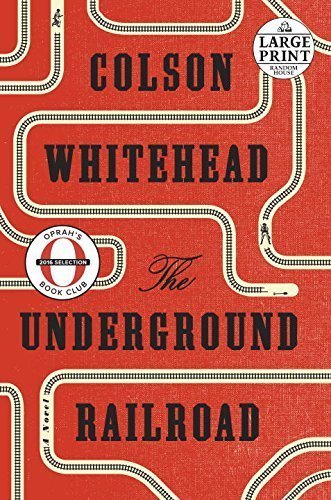
The Underground Railroad by Colson Whitehead
Whitehead pulls no punches in this deftly structured, brilliantly written novel, which takes on slavery, the Tuskegee syphilis experiments, a white supremacist state similar to Nazi Germany, and the United States' full history of white brutality against black people. The Underground Railroad is a necessary antidote to sanitized histories of America's racial divide, as well as a stunning example of both historical and speculative fiction at their most powerful. ― Claire Fallon, Books and Culture Writer
Good morning, class. Raise your hand if you actually read your summer assignments, Great Expectations and Nineteen Eighty-Four. Yes, raise your hand if you did read those books. Did read, yes. What's that you say? An extension, you say? Too hot outside to focus? Well. I don't know if I ― OK. But just this once.
Now that school's back in sesh, and the oppressive gloom of the heat dome is giving way to crisp, snuggle-inducing air, we think it's time for students and former students alike to push the boundaries of the usual syllabi and curl up with something new. Not that classics aren't classics for a reason ― although some, if we're to take students' words for it, are a little outmoded in their language and themes.
But the Western canon is largely made up of a monolithic scheme of writers (read: white, male), so adding in variety would not only expand readers' understanding of American life, it would better represent American readership.
We've rounded up a few books ― some of them new, some of them newish ― that we think should be required reading. Some directly confront women's issues like infertility; others are lyrical explorations of black life in America. Have a look, and read on.
The Underground Railroad by Colson Whitehead
Whitehead pulls no punches in this deftly structured, brilliantly written novel, which takes on slavery, the Tuskegee syphilis experiments, a white supremacist state similar to Nazi Germany, and the United States' full history of white brutality against black people. The Underground Railroad is a necessary antidote to sanitized histories of America's racial divide, as well as a stunning example of both historical and speculative fiction at their most powerful. ― Claire Fallon, Books and Culture Writer
Tuesday, September 27, 2011
That you think of setting a book
A quote from Mary Shelley's Frankenstein, itself written near Geneva, opens the book. While Harris points out that many hedge funds have relocated there for both tax reasons and to be near the large hadron collider at Cern, from where they might recruit the mathematicians and physicists needed to develop increasingly sophisticated computer models, "as soon as you think of setting a book in Geneva, then Frankenstein does loom large". It is not only a man-made monster running out of control that provides the literary and scientific underpinning to the novel: Darwin features prominently and the shade of Orwell hangs over the book, with its emphasis on surveillance, sinister corporations and an anti-democratic dystopia.
Set on British general election day 2010, Robert Harris's latest novel is a characteristic combination of ripping yarn, political and historical verisimilitude and diligent research into a hither-to closed world. The Fear Index is set within the mysterious opulence of a Geneva based algorithmic hedge fund. The company at the heart of his story has developed an artificially intelligent, "self-learning" computer model that trawls the world for information and allows its traders to anticipate market movements prompted, usually, by some disaster or failure. But having delivered this novel about predicting the future – it could be claimed as easily by the science fiction community as the thriller world – Harris was surprised to see on the BBC website a few weeks ago the headline "Supercomputer predicts revolution" and a story about how the Arab spring was foreshadowed via "automated sentiment mining" in which websites were searched for increased preponderance of words such as "terrible" and "horrific".It is a peculiarly apt concern.
"Orwell has always been a huge influence on me," he says. "He first came to mind regarding this project about 12 years ago when I read a book by Bill Gates in which he said one day the McDonald's headquarters in America would know when a Big Mac was sold in Newbury and then a computer algorithm would work out when the cattle had to be slaughtered in Chicago. I got very interested in these ideas but couldn't find a way to make them work in fiction. Then came the financial crash and I realised I could marry the two things. These algorithms that were driving companies were nowhere more dominant than in the City.
Set on British general election day 2010, Robert Harris's latest novel is a characteristic combination of ripping yarn, political and historical verisimilitude and diligent research into a hither-to closed world. The Fear Index is set within the mysterious opulence of a Geneva based algorithmic hedge fund. The company at the heart of his story has developed an artificially intelligent, "self-learning" computer model that trawls the world for information and allows its traders to anticipate market movements prompted, usually, by some disaster or failure. But having delivered this novel about predicting the future – it could be claimed as easily by the science fiction community as the thriller world – Harris was surprised to see on the BBC website a few weeks ago the headline "Supercomputer predicts revolution" and a story about how the Arab spring was foreshadowed via "automated sentiment mining" in which websites were searched for increased preponderance of words such as "terrible" and "horrific".It is a peculiarly apt concern.
"Orwell has always been a huge influence on me," he says. "He first came to mind regarding this project about 12 years ago when I read a book by Bill Gates in which he said one day the McDonald's headquarters in America would know when a Big Mac was sold in Newbury and then a computer algorithm would work out when the cattle had to be slaughtered in Chicago. I got very interested in these ideas but couldn't find a way to make them work in fiction. Then came the financial crash and I realised I could marry the two things. These algorithms that were driving companies were nowhere more dominant than in the City.
Friday, September 16, 2011
Nightshade - lettrici americane di letteratura soprannaturale YA
Nightshade, a detta delle lettrici americane di letteratura soprannaturale YA, si distacca dalla media dei romanzi appartenenti al genere per ricchezza e originalità del world-building e della mitologia e per complessità della storia. Esso racconta, con un gran bel ritmo narrativo, la storia della determinata diciassettenne Calla Tor, un lupo mannaro Alpha (aspetto assai raro nei personaggi femminili paranormal romance). Calla appartiene al branco Nightshade, composto, come il vicino, non da semplici lupi mannari, ma da tostissimi guardiani che hanno il compito di proteggere i misteriosi maghi “buoni” - che governano i mannari -, dai maghi “cattivi” (Keepers e Searcherers in inglese). Ogni guardiano deve conformarsi al proprio ruolo e rispettare precise regole, alcune delle quali a base di sangue.
Nightshade, di Andrea Cremer, è il primo volume di una serie paranormal romance YA in corso di pubblicazione in 25 Paesi e l’apprezzato romanzo d’esordio dell’autrice statunitense.
Calla “kick-ass” Tor è destinata, sin dalla nascita, a Ren Laroche, affascinante lupo-guardiano di un altro branco. I due ragazzi si uniranno al loro diciottesimo compleanno e creeranno un terzo branco locale. Così fu deciso dai maghi a suo tempo e così sarà. Ma un giorno la ragazza s’imbatte in un umano, Shay Doran, nuovo della città e della scuola che frequenta, e qualcosa di assolutamente imprevisto e inaccettabile scatta (d’altronde gli ormoni adolescenziali…). Di lì a poco nascerà un triangolo amoroso che, a differenza dei molti di cui abbiamo letto, sarà ben costruito e ricco di “vibrazioni”. Attraverso Shay - che, si scoprirà, non è un ragazzo qualsiasi (i maghi “cattivi”, infatti, cercheranno di rapirlo) - la ragazza comincerà a capire che qualcosa, nel tipo di vita imposto dai maghi, davvero non va.
Nightshade, di Andrea Cremer, è il primo volume di una serie paranormal romance YA in corso di pubblicazione in 25 Paesi e l’apprezzato romanzo d’esordio dell’autrice statunitense.
Calla “kick-ass” Tor è destinata, sin dalla nascita, a Ren Laroche, affascinante lupo-guardiano di un altro branco. I due ragazzi si uniranno al loro diciottesimo compleanno e creeranno un terzo branco locale. Così fu deciso dai maghi a suo tempo e così sarà. Ma un giorno la ragazza s’imbatte in un umano, Shay Doran, nuovo della città e della scuola che frequenta, e qualcosa di assolutamente imprevisto e inaccettabile scatta (d’altronde gli ormoni adolescenziali…). Di lì a poco nascerà un triangolo amoroso che, a differenza dei molti di cui abbiamo letto, sarà ben costruito e ricco di “vibrazioni”. Attraverso Shay - che, si scoprirà, non è un ragazzo qualsiasi (i maghi “cattivi”, infatti, cercheranno di rapirlo) - la ragazza comincerà a capire che qualcosa, nel tipo di vita imposto dai maghi, davvero non va.
Subscribe to:
Posts (Atom)