Friday, August 26, 2016

13 Illuminating Books That Should Be Required Reading

Getting ready to go back to school? Looking to start a book club? Here are 13 timeless books to read this fall.

Good morning, class. Raise your hand if you actually read your summer assignments, Great Expectations and Nineteen Eighty-Four. Yes, raise your hand if you did read those books. Did read, yes. What's that you say? An extension, you say? Too hot outside to focus? Well. I don't know if I ― OK. But just this once.

Now that school's back in sesh, and the oppressive gloom of the heat dome is giving way to crisp, snuggle-inducing air, we think it's time for students and former students alike to push the boundaries of the usual syllabi and curl up with something new. Not that classics aren't classics for a reason ― although some, if we're to take students' words for it, are a little outmoded in their language and themes.

But the Western canon is largely made up of a monolithic scheme of writers (read: white, male), so adding in variety would not only expand readers' understanding of American life, it would better represent American readership.

We've rounded up a few books ― some of them new, some of them newish ― that we think should be required reading. Some directly confront women's issues like infertility; others are lyrical explorations of black life in America. Have a look, and read on.

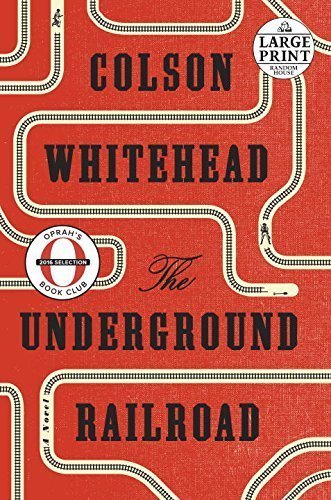
The Underground Railroad by Colson Whitehead

Whitehead pulls no punches in this deftly structured, brilliantly written novel, which takes on slavery, the Tuskegee syphilis experiments, a white supremacist state similar to Nazi Germany, and the United States' full history of white brutality against black people. The Underground Railroad is a necessary antidote to sanitized histories of America's racial divide, as well as a stunning example of both historical and speculative fiction at their most powerful. ― Claire Fallon, Books and Culture Writer

Wednesday, December 2, 2015

The best food books of 2015

You wait years for a decent chicken cookbook to come along, then two arrive at once: Catherine Phipps’s Chicken (Ebury) and Diana Henry’s A Bird in the Hand (Octopus). Eggs are next, apparently, with four egg cookbooks slated for 2016.


Both the chicken books are terrific, by the way. You might ask whether we should be cooking and eating so much chicken, given the horrors of intensively reared poultry. But since, vegetarians aside, we seem wedded to our chicken habit, we might as well buy the best we can and cook it better – and these books help. If you start with a whole bird and want to know how to extract every ounce of schmaltzy goodness, you may choose Phipps – a wise and practical companion. Henry, on the other hand, excels on flavours. Dull thighs and breasts are transformed into a miraculously flavoursome Persian stew; or a rich French braise with prunes and red wine; or a springlike broth with tarragon.

This chicken trend comes in a food-book market that is increasingly polarised. Most cookbooks now are promising either health or comfort. On the comfort side are the baking books. With their consoling rivers of ganache, they have an air of childish innocence. Obesity crisis? What crisis? My favourite of 2015 is Honey & Co: The Baking Book (Saltyard) by Itamar Srulovich and Sarit Packer. Honey & Co cakes – from blueberry, hazelnut and ricotta to courgette and golden raisin – are not light on sugar, but to my mind they taste better than anyone else’s.

If you are more interested in why we eat so many cakes than in actually baking them, you might prefer The Oxford Companion to Sugar and Sweets (Oxford). A superb encyclopedia with nearly 600 entries, edited by food historian Darra Goldstein, it covers everything from Viennese cafes to gummy sweets, from Krispy Kreme doughnuts to the slave trade and sugar addiction. One of the recurring themes is that the drive for sugar has been one of the main motivating forces in human existence.

Someone who feels we are too hung up on sweetness is Jennifer McLagan. Her Bitter (Jacqui Small) is a delightful and wholly original celebration of bitter foods, with recipes: from chicory to coffee to Seville oranges to dark greens. McLagan argues that as well as adding complex notes to our meals, bitter flavours can have health benefits. “Without bitterness, we lose a way to balance sweetness.”

This is a more pragmatic approach to nutrition than “clean eating”, a bizarre vogue that shows no sign of abating. It boils down to this: eat raw vegan food and you will be able to master incredibly bendy yoga moves and look like a model. According to Nielsen Book Services, no fewer than 208 of the 1,808 food and drink titles published in the UK in 2014 were on health, dieting and wholefoods. Many of these books – virtuous with spiralised vegetables – promote a guilt-inducing view of food.

Anna Jones is a benign exception. She is a rare author who can write recipes for quinoa “goodness bowls” without making you wish you were eating doughnuts. Her A Modern Way to Cook (4th Estate), a collection of vibrant vegetarian recipes, is already one of the most loved and splattered books in my kitchen (parsnip rosti, sweetcorn fritters, butternut and sweet leek hash). As Jones comments, “wellness doesn’t come at the expense of deliciousness”.

Nigella Lawson would share this view. Her latest, Simply Nigella (Chatto & Windus), may sound like Deliciously Ella, but it begins with a welcome polemic against “clean eating”. “Food is not dirty,” she notes, “the pleasures of the flesh are essential to life and, however we eat, we are not guaranteed immortality or immunity from loss.” Lawson brings together the warring factions of comfort and health. She has embraced chia seeds and avocado toast – the book is worth buying for the toasty olive oil granola alone – but still gives us the hearty stews and cakes we know and love her for. If bundt tins sell out, we’ll know why.

Away from the clamour of “wellness”, many cooks and chefs continue to produce excellent books on the dishes they love most. Given how many superb books Nigel Slater has already written, it feels ridiculous to recommend another, but his A Year of Good Eating (4th Estate), in a sky-blue cover, is simply a joy. He packs more careful culinary observation on to a page than most authors manage in a whole book. A case in point: his sublime tempura recipe.

Another volume of understated pleasure is Kristen Miglore’s Food52 Genius Recipes (Ten Speed Press). Miglore has gathered cult recipes – such as Daniel Patterson’s eggs scrambled in water – and explained why they are so brilliant. You feel you are in the company of an inquiring kitchen mind. The same is true of Nopi: The Cookbook (Ebury) by Yotam Ottolenghi and Ramael Scully. It may not be Ottolenghi’s easiest book, but it is the most elegant, spiced with pink peppercorns and black garlic. Seven years after his first cookbook, his recipes remain the most exciting around. Who else would think to roast a whole celeriac for three hours “like a creature from outer space”?

Cookbooks allow us to travel – if not as far as space, at least to other countries. The Nordic Cookbook (Phaidon) by the Swedish chef Magnus Nilsson is a magnificent achievement. I sometimes get impatient with these vast cheffy books, too big to read in bed, but in this case the size is justified. Like Claudia Roden, Nilsson is interested in the subtle variations of home cooking – Scandinavian classics, from waffles to pickled herrings. The recipes are hearty and unpretentious (try the potato patties!), though you’ll probably want to skip the section on puffin cuisine.

Meanwhile, in Mamushka (Mitchell Beazley), the best food debut of the year, Olia Hercules takes us to her home country of Ukraine which, she points out, is not “grey and bleak”, as westerners imagine, but a sunny place an hour’s flight from Turkey. I fell for Hercules’s warm reminiscences and her recipes – for yoghurt drop scones, Armenian roast vegetables and garlicky Georgian poussins cooked in a skillet weighted down with a mortar. Mamushka offers the rare feeling that, amid this Babel of recipes, there is still something new to discover.

• Consider the Fork: A History of How We Cook and Eat by Bee Wilson is published by Penguin. Save at least 30%. Browse all the critics’ choices at bookshop.theguardian.com or call 0330 333 6846. From now until Christmas, 20p from each title you order will go to the Guardian and Observer charity appeal 2015.

Sunday, November 1, 2015

On Cricket by Kevin Pietersen – digested read

I love my family and I love cricket. In that order. So let me put this on the record straight away. When those complete cu – I mean those really thoughtful and intelligent cricket strategists, Straussy and Cooky, two of the best guys you could ever hope to meet – dropped me from the international squad, I was happy to take it on the chin. Despite what people say, KP is not a cricketer with a big ego. There’s nothing I like more than just sitting at home with Jess, staring at myself in the mirror. Nor was I in any way disappointed when England surprised everyone by winning the Ashes and even Piers Morgan and Tom Holland stopped their incessant tweets demanding my recall. Because KP always has been and always will be a team player.
In cricket, as in life, we all have to move on and I think it’s time to let bygones be bygones. When I wrote my autobiography two years ago, I didn’t anticipate that slagging off every England cricketer I had ever played with might put a few people’s backs up. What I said was always intended as constructive criticism – a chance to use my genius to improve English cricket for decades to come – rather than to settle some old scores with a bunch of losers. But I see now that some people might not have been ready for that approach, so I want to put the record straight now. If I did call some of you miserable shits miserable shits, I didn’t mean it. And please, please don’t forget me. My phone hasn’t rung for days.

So I’m writing this book not to try and crawl my way back into the England team by proving that I can be as dull and boring as the rest of them, but to put the record straight. And to remind a few of those who might have forgotten who KP was just how brilliant KP is. Let me tell you this. I know I sometimes have a brash exterior that can rub people up the wrong way, but deep down KP feels just as vulnerable as those, like Matt Prior, with more cause to feel stressed. Because KP hates letting people down. That’s the trouble with setting yourself such high standards.

I would also like to correct another misimpression left by my last book. When I said I had left South Africa because the new quota system was preventing me from getting into the national team because I was white, I was actually misquoting myself. I now quite understand that some black cricketers were born with disadvantages, and the reason I came to England was to make it easier for them to get into the South African side. Because obviously it would have been very difficult for the Saffer selectors not to pick me.

One question I am almost never asked these days, because no one really cares about anything I say or do any more, is: “When did you realise you were the best batsman in the world?” The answer is quite simple. Very early on, though I would also like to say I’ve had to work very hard on my brilliance. To become quite so obnoxious and disliked by almost everyone I’ve played with is a talent that needs to be worked on every bit as my batting.

And that’s all I’ve got to say really, but as I have another 200 pages to fill I’m going to copy out a few bits from my autobiography and pad it out with some stuff you can find in any coaching manual. Playing fast bowling is very demanding so I always made sure I was awake and switched on before going out to bat. The key was to block out the good balls and try to score off the bad ones: above all I was always keen never to let a bowler dominate me. The best fast bowler I ever faced was (note to ghost writer: put in anyone as long he’s not English).

Playing spin bowling is very demanding so I always made sure I was awake and switched on before going out to bat. The key was to block out the good balls and try to score off the bad ones: above all I was always keen never to let a bowler dominate me. The best spin bowler I ever faced was (note to ghost writer: put in anyone as long he’s not English).

Have I said how difficult it is being KP? Always being under pressure to score runs, because I was the best player in the side, was never easy and I always tried to make life easy for everyone else in the dressing room. Cricket is a team game. No one should ever forget that.

Thursday, October 8, 2015

Svetlana Alexievich wins 2015 Nobel prize in literature

Svetlana Alexievich, the Belarusian writer whose oral histories have recorded thousands of individual voices to map the implosion of the Soviet Union, has won the Nobel prize for literature.
The Swedish Academy, announcing her win, praised Alexievich’s “polyphonic writings”, describing them as a “monument to suffering and courage in our time”.

She becomes the 14th woman to win the prize since it was first awarded in 1901. The last woman to win, Canada’s Alice Munro, was handed the award in 2013.

Speaking by phone to the Swedish broadcaster SVT, Svetlana Alexievich said that the award left her with a “complicated” feeling.

“It immediately evokes such great names as [Ivan] Bunin, [Boris] Pasternak,” she said, referring to Russian writers who have won the prize. “On the one hand, it’s such a fantastic feeling, but it’s also a bit disturbing.”

The academy called while she was at home, “doing the ironing,” she said, adding that the 8m Swedish krona (£775,000) prize would “buy her freedom”.

“It takes me a long time to write my books, from five to 10 years. I have two ideas for new books so I’m pleased that I will now have the freedom to work on them.”

Alexievich was born on the 31 May 1948 in the Ukrainian town of Ivano-Frankovsk into a family of a serviceman. Her father is Belarusian and her mother is Ukrainian. After her father’s demobilisation from the army the family returned to his native Belorussia and settled in a village where both parents worked as schoolteachers. She left school to work as a reporter on the local paper in the town of Narovl.

She has written short stories, essays and reportage but says she found her voice under the influence of the Belorusian writer Ales Adamovich, who developed a genre which he variously called the “collective novel”, “novel-oratorio”, “novel-evidence”, “people talking about themselves” and the “epic chorus”.

According to Sara Danius, the permanent secretary of the Swedish Academy, Alexeivich is an “extraordinary” writer.

“For the past 30 or 40 years she’s been busy mapping the Soviet and post soviet individual,” Danius said, “but it’s not really about a history of events. It’s a history of emotions – what she’s offering us is really an emotional world, so these historical events she’s covering in her various books, for example the Chernobyl disaster, the Soviet war in Afghanistan, these are in a way just pretexts for exploring the Soviet individual and the post-Soviet individual.”

“She’s conducted thousands and thousands of interviews with children, with women and with men, and in this way she’s offering us a history of human beings about whom we didn’t know that much ... and at the same time she’s offering us a history of emotions, a history of the soul.”

In Voices From Chernobyl, Alexievich interviews hundreds of those affected by the nuclear disaster, from a woman holding her dying husband despite being told by nurses that “that’s not a person anymore, that’s a nuclear reactor” to the soldiers sent in to help, angry at being “flung ... there, like sand on the reactor”. In Zinky Boys, she gathers voices from the Afghan war: soldiers, doctors, widows and mothers.


“I don’t ask people about socialism, I ask about love, jealousy, childhood, old age,” Alexievich writes in the introduction to Second-hand Time, which is due from independent publisher Fitzcarraldo Editions in 2016. “Music, dances, hairstyles. The myriad sundry details of a vanished way of life. This is the only way to chase the catastrophe into the framework of the mundane and attempt to tell a story.

“It never ceases to amaze me how interesting ordinary, everyday life is. There are an endless number of human truths … History is only interested in facts; emotions are excluded from its realm of interest. It’s considered improper to admit them into history. I look at the world as a writer, not strictly an historian. I am fascinated by people.”

Danius pointed new readers towards her first book U vojny ne ženskoe lico (War’s Unwomanly Face), based on interviews with hundreds of women who participated in the second world war.

“It’s an exploration of the second world war from a perspective that was, before that book, almost completely unknown,” she said. “It tells the story of the hundreds and hundreds of women who were at the front in the second world war. Almost one million Soviet women participated in the war, and it’s a largely unknown history. It was a huge success in the Soviet Union union when published, and sold more than 2m copies. It’s a touching document and at the same time brings you very close to every individual, and in a few years they all will be gone.”
Advertisement

According to her close friend, the Belarusian opposition leader Andrei Sannikov, Alexeivich writes about “the history of the Red Man”.

“She claims he is not gone,” Sannikov said. “She argues that this man is inside us, inside every Soviet person. Her last book, Second-hand Time, is dedicated to this problem.” Alexeivich is “wonderful at interviewing” he continued. “She doesn’t avoid difficult issues or questions. Mostly she writes about human tragedy. She lets it go through her and writes with surgical precision about what’s going on within human nature.”

Bela Shayevich, who is currently translating Alexievich into English for Fitzcarraldo, also paid tribute to her skills as an interviewer which leave her work “resounding with nothing but the truth”.
“The truth of life in the Soviet Union and post-Soviet Russia is not an easy thing to swallow,” Shayevich said. “I’m thrilled that this win will mean that more readers will be exposed to the metaphysical dimensions of her subjects’ survival and despair through the tragedies of Soviet history. I hope that in reading her, more people see the ways that suffering – even suffering brought on by geopolitical circumstances foreign to many readers – is also something that can bring people closer to one another if they are willing to take a risk and listen.”

Although Alexievich is widely translated into German, French and Swedish, winning a range of major prizes for her work, English editions of her work are sparse. Fitzcarraldo editor Jacques Testard came across her work in French a few years ago.

“It’s an oral history, as are all her books, about nostalgia for the Soviet Union,” said Testard. “She went around Russia interviewing people after the fall of the Soviet Union, in an attempt to surmise what the collective post Soviet psyche is. As with all her books, it’s really harrowing – a story about loss of identity, about finding yourself in a country which you don’t recognise any more. It’s a micro-historical survey of Russia in the second half of the 20th century, and it goes up to the Putin years.”

“She’s been a big deal in Europe for a long time, but she’s never really been picked up in England,” he said.

“Her books are very unusual and difficult to categorise. They’re technically non-fiction, but English and American publishers are loath to take risks on a book just because it’s good, without something like a Nobel prize.”

Alexievich led the odds for the 2015 award, ahead of Japan’s Haruki Murakami, Kenya’s Ngũgĩ wa Thiong’o and the Norwegian playwright Jon Fosse.

Friday, September 18, 2015

Man Booker shortlist 2015: is this the most diverse lineup ever?


So a panel that, as Booker tradition requires, contains three middle-aged white males – chairman Michael Wood, John Burnside and Sam Leith – have come up with a shortlist that includes only one novelist who mirrors them. Like Edward St Aubyn in 2006 and Will Self in 2012, Tom McCarthy is the last MAWM left standing; he is also the sole mid-career author and previous shortlistee. After a brutal cull of eminent entrants, past winners among them, in their 40s, 50s and 60s at the longlist and shortlist stages, there is a striking disparity in experience between Anne Tyler, shortlisted for her 20th and possibly last book, and the remaining four finalists with eight novels between them.

Whatever the explanation of this slaughter of the seasoned – did the old guard all underperform, or was there a bias towards new faces and fiction? – the result could well be, in terms of ethnicity and age-range at least, the most diverse shortlist ever. Marlon James is the Booker’s first Jamaican shortlistee and would be the first African-Caribbean winner. Chigozie Obioma, 28 (with Eleanor Catton, the joint youngest finalist), would be the first Nigerian winner since Ben Okri in 1991 and joins another short list: in a prize that has been scandalously reluctant to appoint non-white judges – Ellah Wakatama Allfrey this year appears to be only the fourth – just four black authors from sub-Saharan Africa have reached this stage before him.

Derby-born Sunjeev Sahota would be the first UK-native British winner from any ethnic minority (VS Naipaul and Salman Rushdie, in contrast, were born abroad), and the first maths graduate to triumph since JM Coetzee. The short-odds favourite Hanya Yanagihara would be the first author of east Asian heritage to win since Kazuo Ishiguro in 1989, and she or Tyler would of course be the first American winner (as a magazine journalist, she would arguably be also the first winner with a “real”, non-literary job since Roddy Doyle, unless Arundhati Roy’s aerobics teaching qualifies). At 73, Tyler would probably be the venerable award’s oldest winner, as even the Dumbledore-esque William Golding was a mere 69 when he saw off a furious Anthony Burgess in 1980.

However, the shortlist’s rainbow-like appearance is somewhat deceptive, since (as Philip Hensher noted on Twitter, grumpily adding “told you so”) “four out of six of Booker shortlist American or America-residing novelists” – James and Obioma both have US academic posts, joining the two women – while the other pair are Brits. And if you take away the 70s Jamaica of A Brief History of Seven Killings and the 90s Nigeria of The Fishermen, plus The Year of the Runaways’ Indian flashbacks, what’s left suddenly looks distinctly narrow in focus and familiar: a 200-mile stretch of the US east coast (Tyler’s Baltimore, Yanagihara’s New York) and two cities in England’s eastern half (McCarthy’s London, Sahota’s Sheffield) linked by 180 miles of the M1.

• To buy any of these books, or the full shortlist for £60 (RRP £80.94), go to bookshop.theguardian.com or call 0330 333 6846. Free UK p&p over £10, online orders only. Phone orders min. p&p of £1.99.